A drooping, sad-looking plant is one of the most common reasons people search for help online — and one of the most confusing, because the two most likely causes look almost identical at first glance.
You'll learn a quick, practical way to tell whether your plant is overwatered or underwatered, and what to do next.
Quick Answer: Check the soil moisture first, then look at the leaves. Overwatered plants usually have soft, yellowing leaves and consistently wet, heavy soil. Underwatered plants usually have crispy, dry leaf edges and soil that's pulled away from the pot or feels bone-dry. If the soil is wet but the plant is still drooping, the roots may already be damaged and unable to take up water properly.
Why Overwatering and Underwatering Look So Similar
Both problems come down to the same underlying issue: the plant's cells can't hold enough water to stay firm, a condition called turgor pressure. When turgor pressure drops, leaves and stems droop — no matter what caused it.
- With underwatering, there simply isn't enough water in the soil for the roots to absorb.
- With overwatering, there's often plenty of water, but waterlogged soil pushes out oxygen the roots need, and damaged or rotting roots can't absorb water even though it's right there.
That's why the same droopy, sad appearance can mean two almost opposite problems.
Signs of an Overwatered Plant
Leaves
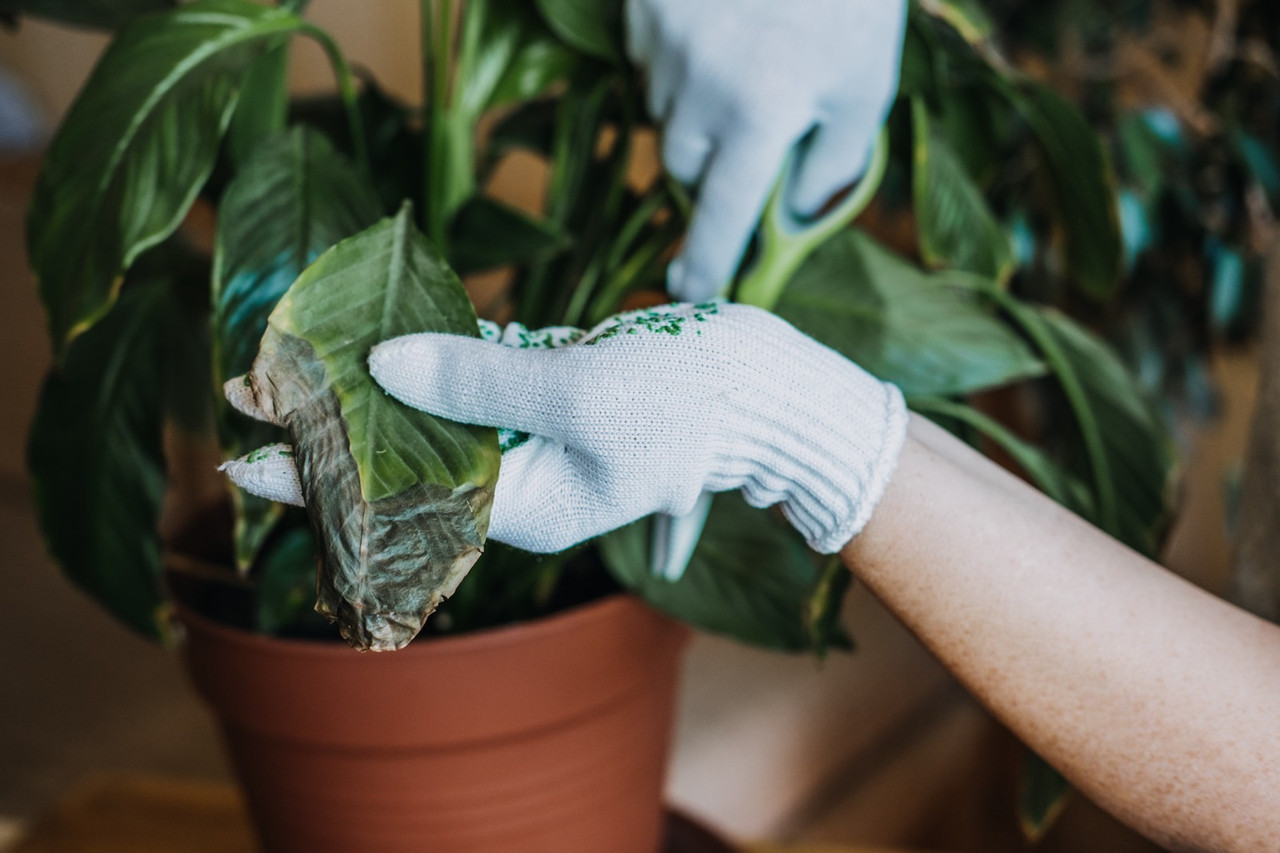
Leaves often turn yellow, particularly starting with yellowing that often starts with lower or older leaves. Yellow leaves from overwatering tend to feel soft or slightly mushy rather than crisp.
Soil
The soil stays visibly wet for days, feels heavy, and may develop a musty or sour smell.
Roots
Healthy roots are usually:
- firm to the touch
- pale or light-colored in many common houseplants
- not slimy or mushy
Rotten roots are usually:
- dark or discolored
- soft or mushy when pinched
- sometimes have an unpleasant smell
Root color varies between plant species, so it's best to judge by texture and smell alongside color rather than color alone.
Signs of an Underwatered Plant
Leaves
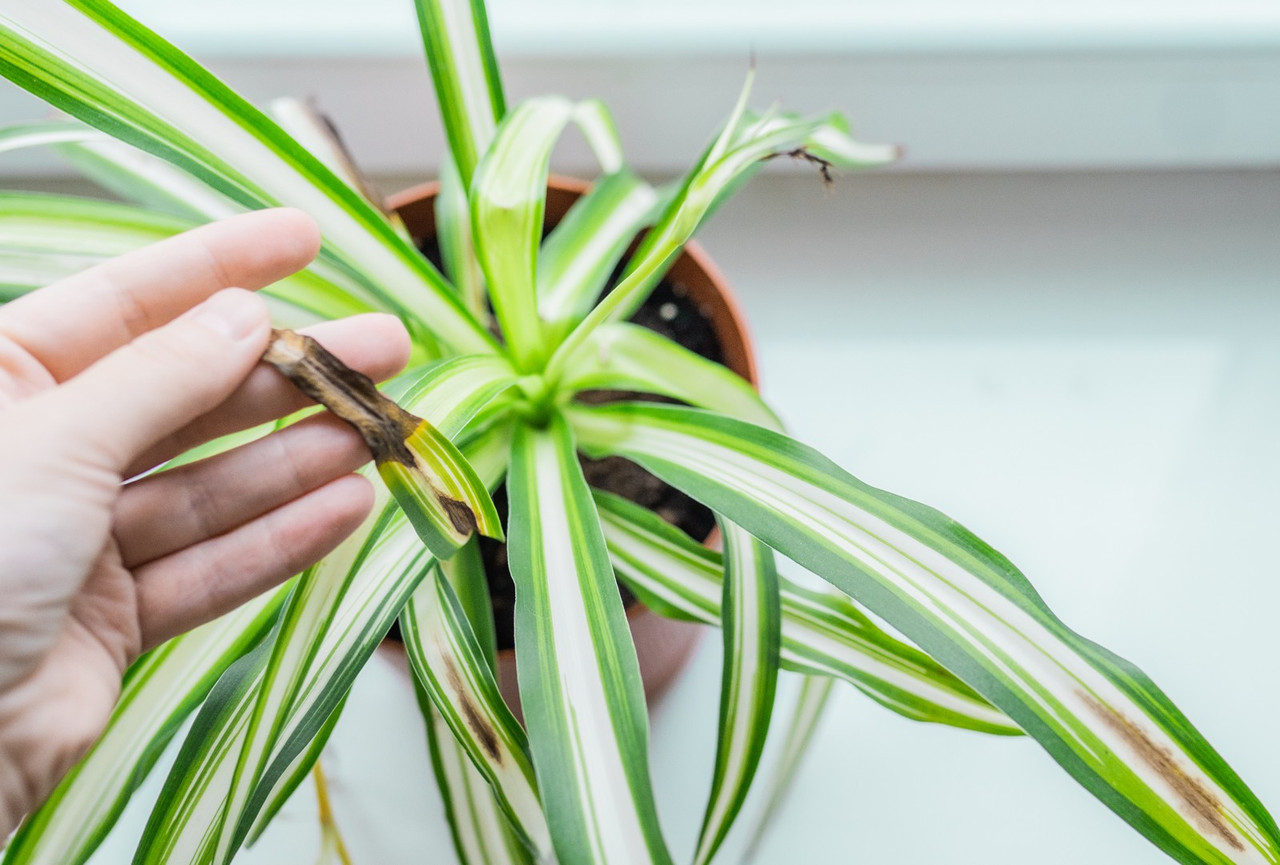
Leaves develop crispy, dry, brown edges or tips, and may curl or feel thin and brittle.
Soil
The soil is bone-dry, may have pulled away from the sides of the pot, and water can run straight through without soaking in.
Pot Weight
A dry pot feels noticeably lighter than a recently watered one — a useful, quick check even without touching the soil.
Overwatering vs Underwatering at a Glance
| Sign | Overwatered | Underwatered |
|---|
| Leaf color | Yellowing, often lower leaves first | Green fading to brown at edges/tips |
| Leaf texture | Soft, sometimes mushy | Crispy, dry, brittle |
| Soil | Stays wet for days, heavy | Bone-dry, pulls from pot edges |
| Pot weight | Noticeably heavy | Noticeably light |
| Roots (if checked) | Often dark, soft, or mushy, possible odor | Dry, brittle, may look shriveled |
| Smell | Musty or sour soil smell | No unusual smell |
A Quick 2-Step Check You Can Do Right Now
Step 1 — Check the Soil
Push a finger below the dry surface layer — how deep depends on the plant and pot size. A small pot may only need an inch or two; a larger pot may need several inches to get past soil that's dry only on top. If it feels wet, cool, or sticks to your finger, the plant probably doesn't need more water yet. If it feels completely dry and crumbly at that depth, watering is likely overdue. A moisture meter can help if you have one, but it isn't required — your finger works just as well for most houseplants.
Step 2 — Check the Plant (and Roots, If Needed)
Look at the leaves and feel the pot's weight using the signs above. If the picture still isn't clear, gently slide the plant out of its pot to look at the roots directly — this is the most reliable way to confirm what's actually happening below the soil.
When Your Plant Is Drooping but the Soil Is Wet
This is the situation that confuses people most. If the soil is wet but the plant still looks droopy, the roots themselves may already be damaged from sitting in too much moisture, or from a period of poor drainage. Oxygen-starved or rotting roots can't take up water even when it's available, so the plant wilts as if it were thirsty. Adding more water at this point makes things worse, not better.
What to check next:
- How long the soil has stayed wet — days rather than hours is a warning sign
- Whether the pot has drainage holes and whether water is escaping freely
- Light and airflow around the plant, which affect how quickly soil dries
If the soil has been wet for several days, or you suspect poor drainage or standing water in a cache pot or saucer, it's worth checking the roots directly rather than assuming the plant simply needs more water.
How to Fix an Overwatered Plant
- Stop watering and let the soil dry out significantly before the next watering.
- Check that the pot has drainage holes and isn't sitting in standing water.
- Move the plant somewhere with brighter, indirect light and better airflow to help the soil dry faster.
- If roots are soft, dark, or smell bad, trim away the damaged sections with clean scissors and consider repotting into fresh, well-draining soil.
- Going forward, rather than watering on a fixed schedule, check the soil moisture before each watering.
How to Fix an Underwatered Plant
- Water thoroughly until it drains from the bottom of the pot, rather than giving small sips.
- If the soil has pulled away from the pot and water runs straight through, bottom-water by setting the pot in a few inches of water until the soil absorbs it.
- Check the pot again in a few hours — it should feel noticeably heavier.
- Set a simple reminder to check soil moisture regularly so dry spells are caught earlier next time.
When It's Not a Watering Problem at All
- Natural aging: A single old, lower leaf yellowing while the rest of the plant looks healthy is often just normal leaf turnover.
- Light: Too much or too little light can cause drooping or discoloration independent of watering.
- Pests: Sap-sucking pests can cause wilting, spotting, or discoloration that looks like a watering issue.
- Temperature and drafts: Cold drafts, heating vents, or sudden temperature swings can cause drooping even with correct watering.
Mistakes That Make It Worse
- Watering more because the plant looks droopy, without checking the soil first.
- Judging root color alone without also checking texture and smell.
- Using a pot or cache pot with no drainage holes.
- Watering on a fixed schedule instead of checking actual soil moisture.
FAQ
Can a plant recover from overwatering?
Yes, in many cases, especially if it's caught before root rot spreads extensively. Letting the soil dry out and addressing any damaged roots gives the plant a chance to recover.
How long does it take an underwatered plant to recover?
Many plants perk back up within a day or two of a thorough watering, though severely dried-out plants may take longer and could lose some damaged leaves in the process.
Should I repot an overwatered plant immediately?
Not always. If the pot drains well and the soil simply needs to dry out, repotting may not be necessary. Repotting is more important when roots show clear signs of rot.
Is drooping always a watering problem?
No. Light, pests, temperature, and natural aging can all cause drooping, so it's worth ruling out watering issues before assuming another cause.
Final Takeaway
Drooping on its own doesn't tell you much — but a quick soil check paired with a look at the leaves usually will. When in doubt, check the soil before adding more water, since overwatering is often harder to reverse than underwatering.




Comments
Post a Comment