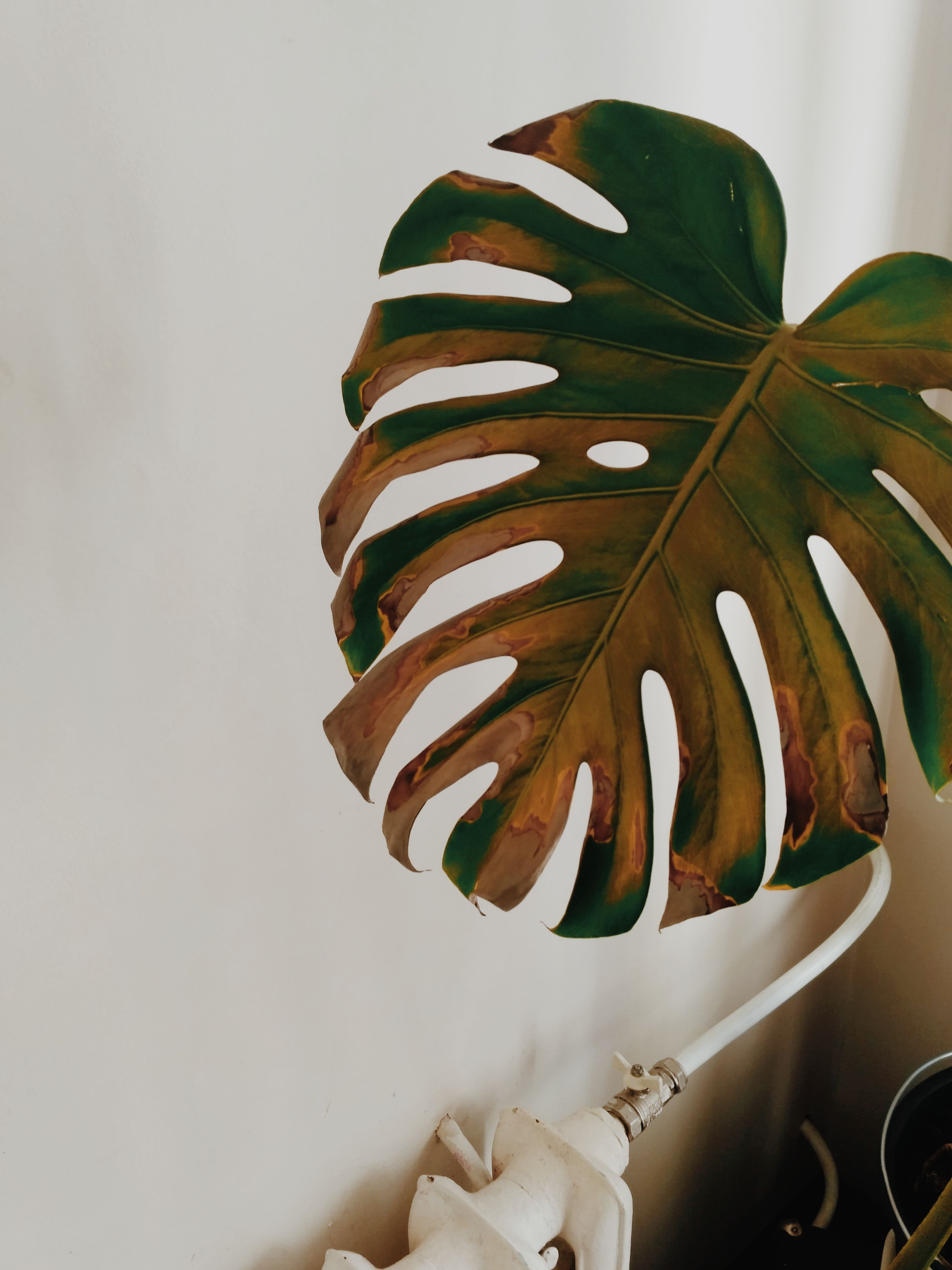
Brown leaves are one of the most common problems houseplant owners run into, and unlike yellowing, browning usually points to a smaller set of causes — most of them related to water, humidity, or light. This guide walks through the most likely causes, starting with the most common, and what to actually do about each one.
Quick answer: crispy brown tips are usually caused by low humidity or inconsistent watering. Soft, mushy brown patches point to overwatering or root rot. Use the table below to narrow down your exact cause.
| What you see |
Most likely cause |
What to check |
| Crispy, dry brown tips and edges, rest of the leaf still green |
Low humidity or underwatering |
Check air moisture and how dry the soil gets between waterings |
| Soft, mushy brown spots or brown edges with a yellow halo |
Overwatering or root rot |
Check soil moisture and look at the roots |
| Brown, papery patches only on the side facing a window |
Sunburn |
Check how much direct sun that side gets |
| Crispy tips with a white, crusty buildup on the soil |
Fertilizer or mineral buildup |
Check fertilizing frequency and tap water use |
| One older, lower leaf browning while the rest looks healthy |
Natural aging |
Check whether new growth looks healthy |
| Brown spots with tiny bugs, webbing, or sticky residue |
Pests |
Inspect closely under good light |
1. Low Humidity
Most common in dry climates, during winter with the heat running, or with plants that naturally prefer higher humidity, like calathea, ferns, and alocasia. Dry air pulls moisture out of leaf tips fastest since they're farthest from the roots, leaving them thin, dry, and brown.
How to tell if this is your problem: the brown parts are dry and papery, usually confined to the very tips and edges, while the rest of the leaf stays green and healthy.
The fix: group plants together, add a pebble tray with water under the pot, or run a humidifier nearby, especially for humidity-loving species. Misting helps briefly but isn't a long-term fix on its own.
2. Underwatering
Similar look to low humidity, but caused by the roots not getting enough water rather than the air being too dry. It often happens after skipping a watering or two, or if a pot dries out much faster than expected.
How to tell if this is your problem: the soil is bone dry and may be pulling away from the sides of the pot, and browning is sometimes paired with drooping or curling leaves before they fully crisp up.
The fix: water thoroughly until it drains from the bottom of the pot, then check the top inch or two of soil before each future watering rather than sticking to a fixed schedule.
3. Overwatering or Root Rot
The opposite problem, and often the more damaging one. When soil stays wet too long, roots can't get enough oxygen and start to rot, so the plant can't take up water properly even though the soil is soaked — which can show up as brown, sometimes mushy, leaf tissue.
How to tell if this is your problem: the soil stays wet for days and may smell sour, and the brown areas are often soft rather than crispy, sometimes with a yellow ring around them.
The fix: let the soil dry out significantly before watering again, and make sure the pot has drainage holes. If the problem has gone on a while, remove the plant from its pot, trim away any dark, mushy roots, and repot into fresh, well-draining soil.
4. Sunburn
Too much direct sun, especially through a window that intensifies light and heat, can scorch leaf tissue much like sunburn on skin.
How to tell if this is your problem: brown, papery, sometimes bleached-looking patches appear only on the side of the plant facing the light source, while the shaded side looks normal.
The fix: move the plant a few feet back from the window, or add a sheer curtain to diffuse direct light, especially during summer afternoons. If that spot ends up too dim afterward, our guide to the best low-light houseplants for apartments can help you pick something better suited to it.
5. Fertilizer or Mineral Buildup
Over-fertilizing, or watering consistently with hard tap water, causes mineral salts to build up in the soil, which can burn root tips and show up as browning further up the plant.
How to tell if this is your problem: crispy brown tips paired with a white, crusty buildup on the soil surface or around the drainage holes.
The fix: flush the soil with plenty of water every couple of months — roughly the pot's volume, poured through slowly and allowed to fully drain — cut back on fertilizer frequency, and consider filtered or distilled water if tap water in your area is very hard.
6. Natural Aging
Not every brown leaf is a problem. Plants shed their oldest leaves as they grow, and a lowest, oldest leaf browning while the rest of the plant pushes out new growth is completely normal.
How to tell if this is your problem: only one lower, older leaf is affected, and the rest of the plant, especially any new growth, looks healthy.
The fix: none needed — trim the leaf off once it's fully brown if you'd rather not look at it.
How to figure out which cause is yours
Work through these questions in order: Are the brown spots soft or mushy rather than dry and crispy? Probably overwatering or root rot — check the soil and roots. Are the tips crispy and papery, and does your home run dry or use forced-air heat? Likely low humidity. Is the soil bone dry when you check it? Underwatering. Is the browning only on the side facing a window? Sunburn. Is there a white crust on the soil? Fertilizer or mineral buildup. Is it just one old, lower leaf with everything else looking fine? Natural aging — no action needed.
What not to do: don't assume every brown leaf is a watering problem — check whether it's crispy or mushy first, since the fixes are opposite. Don't respond to crispy tips by watering more without also checking humidity. And don't feel like you need to cut away every trace of brown right at the green line — trimming to roughly match the leaf's natural shape looks fine, and either way the brown tissue itself won't turn green again.
If your plant's leaves are turning yellow instead of brown, our guide to why Monstera leaves turn yellow walks through those causes separately, since they don't fully overlap with browning. And if you're not sure how much water your plant actually needs in the first place, see how often to water a snake plant for a simple, low-maintenance benchmark.
Once you identify the cause and adjust your care, new leaves should grow in healthy. The brown tissue on an existing leaf won't turn green again, so once the underlying issue is fixed, it's fine to trim it off for appearance.




Comments
Post a Comment